Many older adults want to stay independent while living close to family. An accessory dwelling unit (ADU) can be a practical option. It provides a separate home on the same property as the main house. It has its own kitchen, bathroom, and bedroom, so aging parents can enjoy privacy. At the same time, family members can check on them and help when needed.
A good ADU plan should meet your parent’s needs and fit your budget. You should also consider safety features, local building rules, and future care needs. This guide walks you through the key points to consider before building.
Why Build an ADU for an Aging Parent?
Every family has different needs when planning for an older family member. An ADU offers a flexible housing option that can adapt to those needs.
Stay close to family without giving up privacy
One of the main benefits of an ADU is that it helps aging parents stay close to family while keeping their privacy. They can follow their daily routines, welcome visitors, and enjoy a home of their own without sharing the main house.
Family members can also feel more at ease knowing they are nearby if help is necessary. They can share meals, check in regularly, or assist during an emergency. This setup helps families stay connected while giving everyone space to manage their daily lives.
Create a more flexible alternative to senior living
Many families consider an ADU as an alternative to assisted living or retirement communities because it can offer a more personal and affordable living arrangement. Although building one requires an upfront cost, it may help families save on some monthly fees for senior living.
Aging parents can stay in familiar surroundings in a home designed for their needs. In the future, the unit can serve as a guest house, home office, or rental space if the family’s needs change.
Make it easier to plan for changing care needs
Building an ADU gives families a chance to plan for an aging parent’s future care. Even if a parent is independent now, they may need more help as they grow older. Living nearby makes it easier for family members to assist with errands, doctor visits, and daily tasks.
Families can also add safety features to make the ADU easier to use. Wider doorways, step-free entrances, non-slip floors, and walk-in showers can help older adults move around more safely. Including these features during construction may help reduce the cost of future changes.
Related: ADU Pros and Cons: What You Need to Know Before Building
What Type of ADU Is Best for an Older Adult?
Several types of ADUs can provide a comfortable home for an aging parent. The best option depends on your property, budget, and parent’s needs. Common choices include detached ADUs, attached ADUs, garage conversions, and interior conversions.
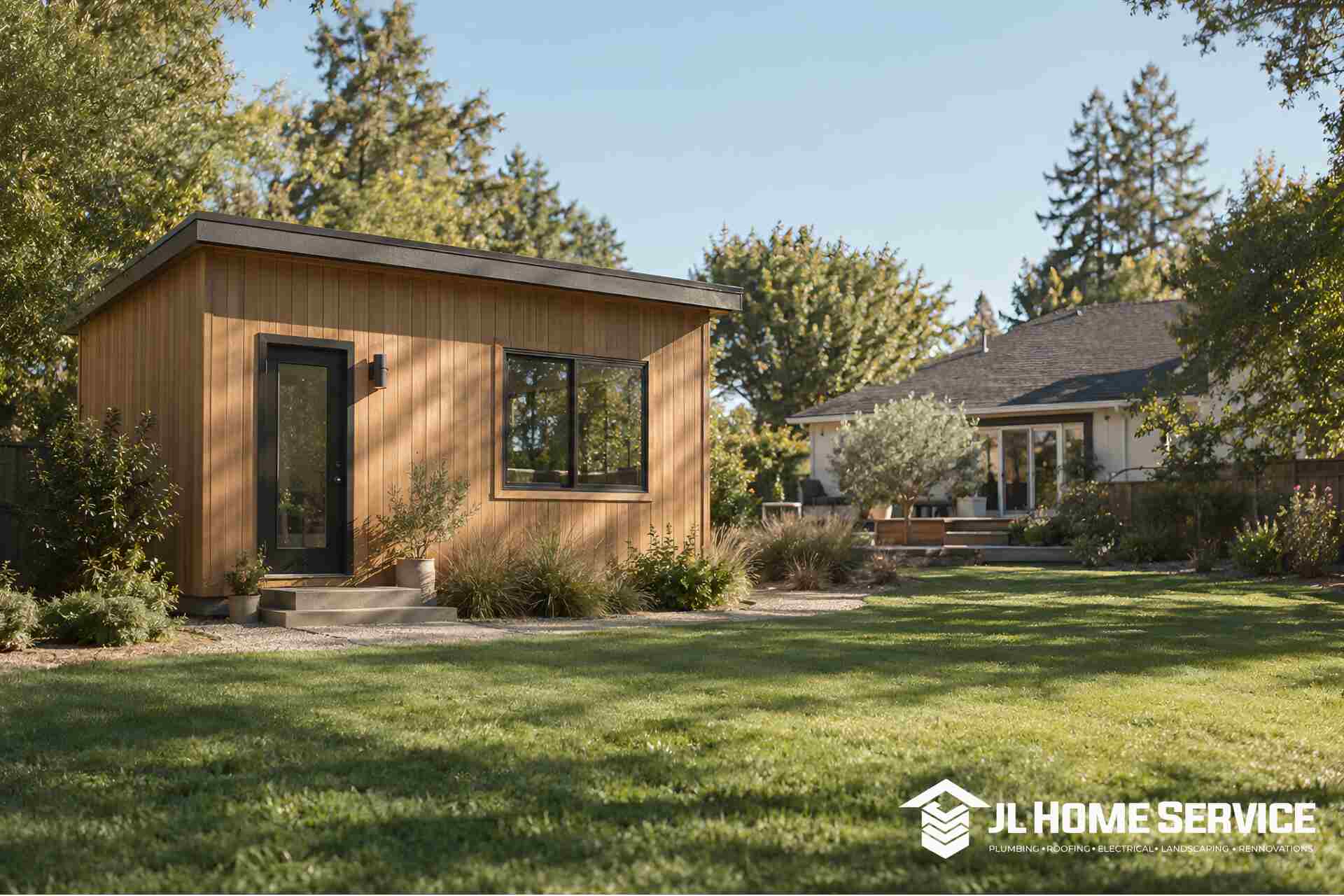
ADUs differ in how they connect to the main house and use the available space. A detached ADU is built separately from the main house. An attached ADU shares a wall with it. You can also turn a garage into a small home or change a basement or spare room into a separate living area.
Your parent’s comfort and safety should guide your decision. Look for features such as step-free entrances, wide doorways, non-slip floors, and an easy-to-use bathroom. Also, think about how quickly you can reach the unit to help with daily tasks or emergencies.
Accessibility Features to Include in an ADU for Seniors
Simple design choices can make everyday activities easier for an aging parent. Consider these features to help them move around, use the bathroom, and enter or leave the ADU safely.
Step-free entryways and wide doorways
A step-free entrance helps your parents enter and leave the ADU without climbing stairs. Keep the path smooth, clear, and well-lit to help prevent trips and falls. If the entrance is higher than the ground, a ramp may make access easier.
Plan for wide doorways throughout the home, especially near the bedroom and bathroom. This gives seniors more room to move and makes it easier to use a walker or wheelchair.
Walk-in or curbless showers with grab bars
Getting in and out of the shower can become harder with age. A walk-in or curbless shower makes entry easier without high edges or steps.
Non-slip flooring and clear walking paths
Choose floors that help prevent slips. This is useful in the bathroom, kitchen, and entryway, where water can make the floor slippery.
Keep walkways clear of loose rugs, cords, shoes, and clutter. Arrange furniture to leave enough room for your parents to move between rooms.
Lever-style door handles and easy-to-reach storage
Use lever-style door handles to make opening doors easier. They are helpful for elderly people who have stiff hands or trouble gripping things. Lever handles are easier to use than round knobs because they need less effort to open.
Keep daily items within easy reach. Store clothes, dishes, and toiletries where they are easy to reach without climbing or bending too much.
Good lighting and accessible light switches
Make sure every room has enough light for seniors to see clearly, especially at night. Add enough lighting to hallways and the path to the bathroom. Place switches near entrances and at comfortable heights so they are easy to reach and use.
A bedroom and bathroom on the same level
Place the bedroom near the bathroom and keep both on the same floor. This helps your aging parent move between the rooms without climbing stairs or walking far. For example, they can use the bathroom at night, even if they use a cane or have trouble walking.
ADU vs. Assisted Living: Which Is Right for Your Family?
Choosing between an ADU and assisted living depends on your parent’s health, daily care needs, budget, and family support. An ADU provides a private home near family, but relatives must provide care or hire a caregiver when needed. Assisted living offers housing, meals, and help with daily tasks, though services vary by facility.
An ADU may suit a parent who can live safely with some help from family. Assisted living may be a better fit for someone who needs regular help with personal care from trained staff. Think about your budget, your parent’s care needs, and your family’s ability to help before making a decision.
Build an ADU That Supports Comfortable Aging in Place
A well-planned ADU can give your aging parent a private home while keeping family close. Choose a layout that makes daily tasks easier and add features that help them move around safely. Have your property checked before building so you can choose a design that fits your space and your family’s needs.
Planning an ADU for an aging parent? Contact JL Home Service to discuss your property, design needs, and construction options.